Riding in the rainy season: what changes on the beach
Between roughly June and September, and often into October, the Oaxacan coast turns green. Afternoon storms roll in off the hills, the rivers fill up and the beach you ride onto at sunset looks and feels different from the one you'd find in March. The ride still runs all year. This post is about what actually changes when you do it in the rainy season, from the river crossing to the sand under the hooves, and how to plan a rainy-season day in Puerto Escondido around it.
If you're still choosing your travel dates, our month-by-month guide to the best time for a beach ride compares the two seasons. Here we assume you're already coming in the green months.
What the rain does to the beach
The Pacific beaches on this stretch of coast are wide, open and exposed to the ocean. The rains change them in a few ways you'll notice from the saddle.
Bigger surf and a narrower beach
The middle of the year is when the big south swells reach Puerto Escondido. That's why surfers come for Zicatela in summer. On the beach, it means louder waves, more foam and, at high tide, less dry sand between the water and the dunes. Your guide keeps the horses on the firm, wet sand above the reach of the shorebreak and well away from the bigger sets. You still ride along the waterline, just with a little more respect for it.
Firmer, darker sand
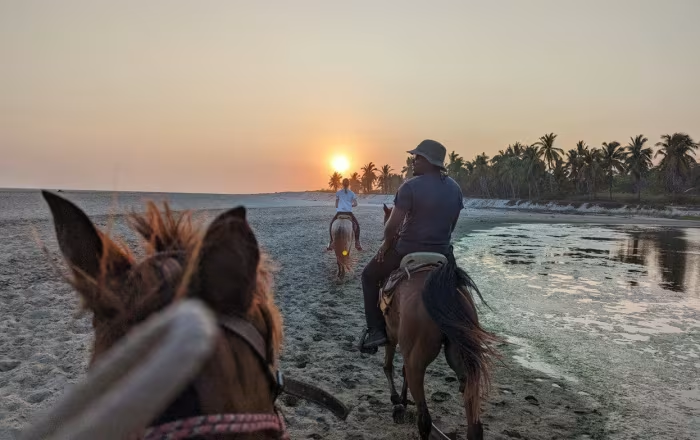
After a night of rain the top layer of sand is packed and damp. It's easier going for the horses than the soft, deep sand of the dry months, and it photographs darker and more reflective at golden hour. On some evenings the wet beach turns into a mirror for the sky.
River mouths and driftwood
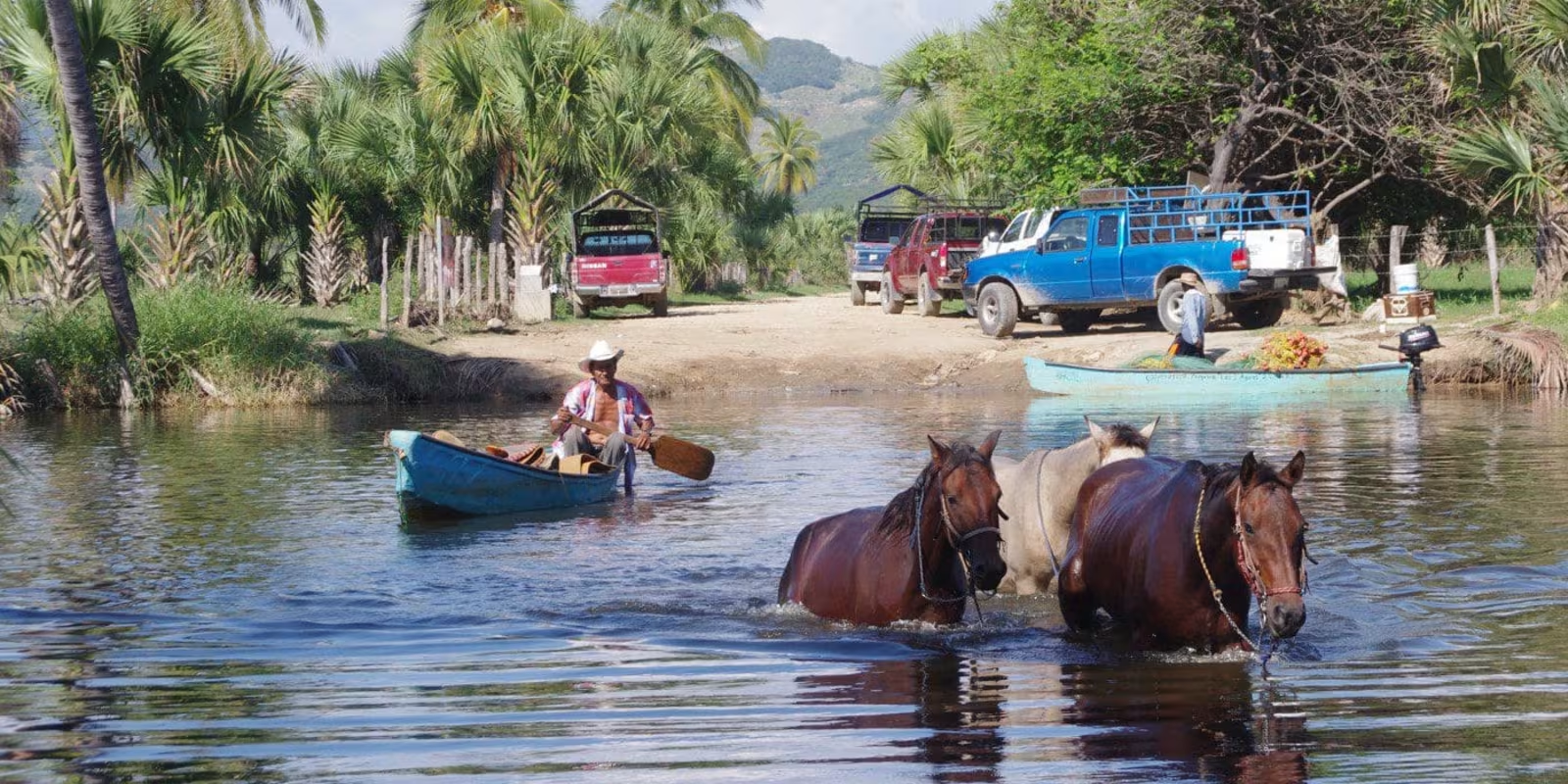
Along this coast, rivers and lagoons are often cut off from the sea by a sandbar for much of the dry season. When the rains fill them, the water usually pushes through and opens a channel across the beach. That can change where a beach can be crossed from one week to the next. The heavy rains also wash branches, palm fronds and logs down to the shore. None of this is a problem, but it is the reason the route may vary a little in the green season: your guide picks the line on the day.
Sea turtles on the sand
From around mid-summer, sea turtles come ashore to nest on many beaches of the Oaxacan coast, a season that runs into the dry months. You may see their tracks in the sand, or a nest that a local turtle camp has marked. Horses and nests don't mix, so if you spot either, give it a wide berth and point it out to your guide.
On the trail before the beach
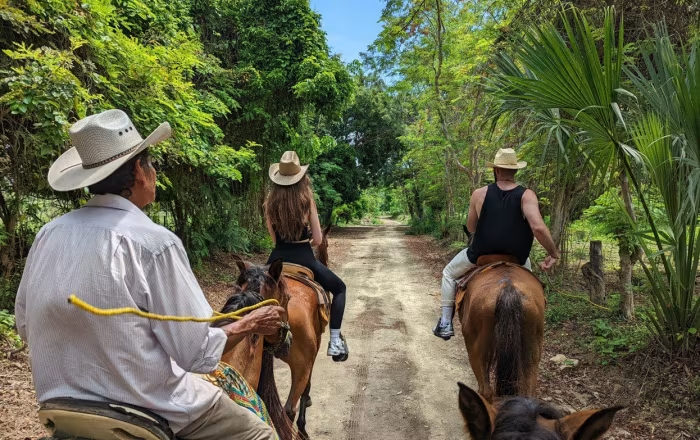
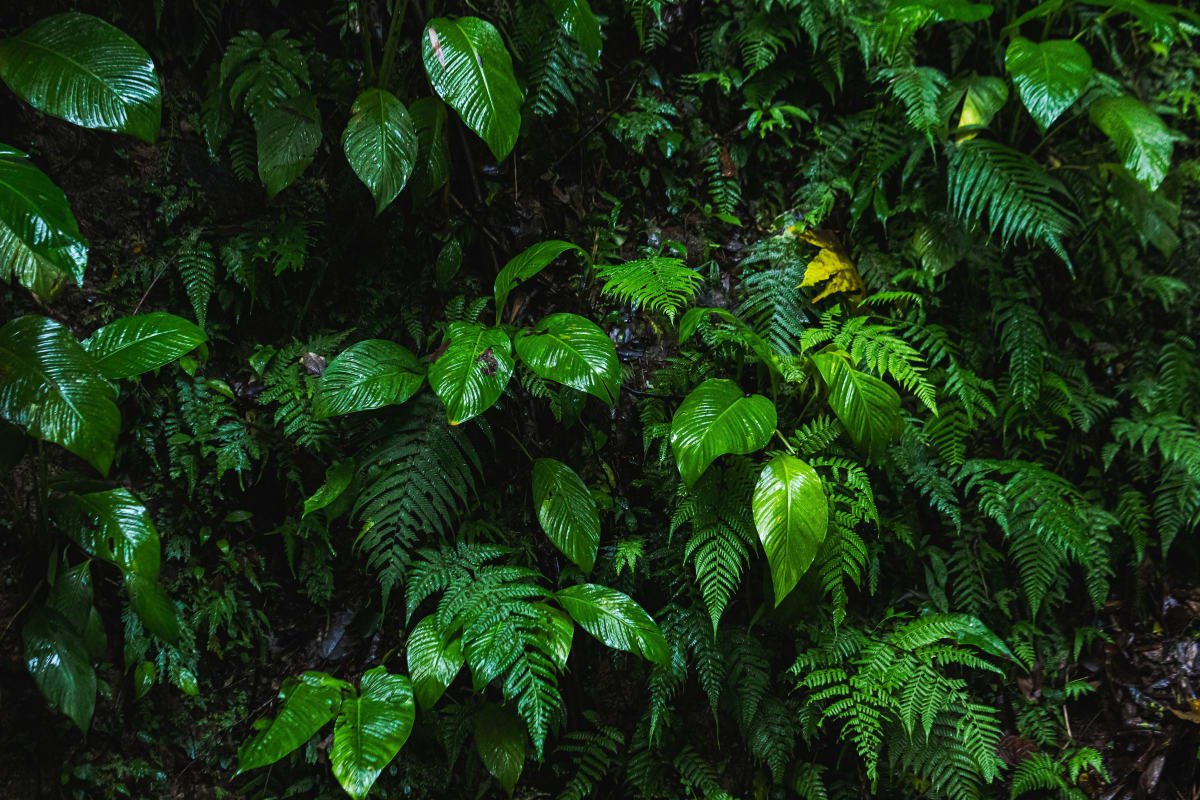
The shared ride spends its first hour or so along the river and under the jungle canopy before it comes out onto the sand. In the rainy season this is the part that changes most:
- A fuller river. Expect water higher up the horses' legs at the crossings, and expect to get splashed. Your guide decides where and whether to cross, depending on the level that day.
- Mud. Parts of the trail get soft after heavy rain. The horses know the ground better than anyone and walk it at a steady pace.
- The greenest jungle of the year. The hills that look golden and dry in April are deep green by July, and the trail is full of birdsong after a shower.
- Mosquitoes. They're more active after rain, especially by the river and at dusk. Put repellent on before you mount.
The sky: storms, clouds and sunsets
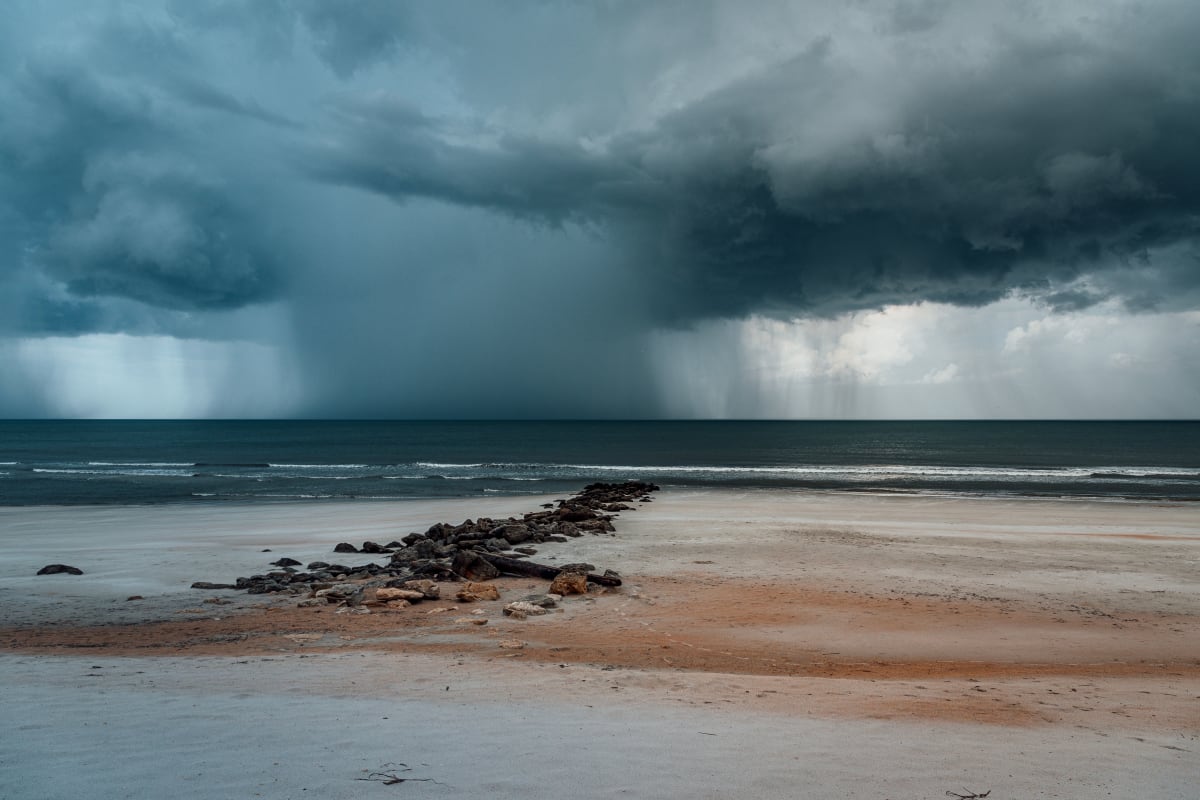
Rainy-season weather on this coast tends to follow a pattern: mornings are often clear, clouds build over the mountains during the afternoon, and storms arrive late in the day or at night. Some evenings that means a curtain of cloud over the horizon and no sun at all. Other evenings the storm passes inland and the broken clouds over the ocean light up orange, pink and purple in a way a cloudless dry-season sky rarely does.
Lightning is the one thing that changes plans. If a storm is right over the coast with lightning nearby, the guide won't take riders out onto an open beach. A light shower is a different story: it's warm, it's brief, and most riders end up laughing about it.
How to plan a rainy-season ride
- Check the forecast that morning, not a week before. Long-range forecasts on this coast show rain almost every day in summer, which usually means a storm at some point, not a washed-out day.
- Keep a spare day. If the weather looks bad on your date, message us on WhatsApp to move it. Booking the ride early in your trip leaves room to reschedule.
- Watch for tropical storms. Eastern Pacific hurricane season runs from mid-May to the end of November. Most weeks pass quietly, but if a named storm is heading for the coast, riding that day won't be sensible. The National Hurricane Center's eastern Pacific page and Mexico's Servicio Meteorológico Nacional are the sources to check.
- Consider a morning departure. The shared ride is built around the sunset, so it always leaves at 3:00 PM. The private ride can leave at 8:00 AM, when rainy-season skies are usually at their clearest. Our comparison of the sunset ride and the private ride explains the rest of the differences.
What to pack in the green season
The usual rules still apply: long pants and closed-toe shoes. On top of that, for the rainy months:
- A full change of clothes and a towel, left in the vehicle for the drive back.
- A small dry bag or a zip-lock bag for your phone.
- Insect repellent, and more of it than you think.
- A light rain poncho if you hate being wet. A thick rain jacket is too hot.
- Shoes you don't mind getting muddy. This is not the day for new white sneakers.
Our guide to what to wear for horseback riding in Puerto Escondido covers clothing in more detail.
Other rainy-season activities in Puerto Escondido
Since rainy-season mornings tend to be clear and afternoons stormy, it helps to put outdoor plans early and keep something flexible for later. A few ideas that suit the green months:
- Watch the big surf. Summer swells at Zicatela can be impressive. Watching the best surfers paddle out is free and best from the beach in the morning.
- Visit the lagoons. The lagoons around Puerto Escondido are full and green in the rainy season, and boat trips through the mangroves are good for birdwatching.
- Go inland. Rivers and waterfalls in the hills run at their strongest after the rains. Ask locally about access, as some roads get rough.
- Save the storm hours for town. A long lunch, the Benito Juárez market or a coffee while the rain comes down is part of the rhythm here.
Planning your first ride? Start with our tips for first-time riders, which apply in any season.