Meet the horses: the Mexican criollo and other breeds you may ride
Most people booking a beach ride ask about the sunset, the trail and what to wear. Fewer ask about the animal they will spend four hours with, yet that's the part that shapes the whole afternoon. On the Oaxacan coast, the horse waiting for you is rarely a registered show breed. More often it is a compact, hardy working horse with a long Mexican history behind it: the criollo, or a mix with criollo blood in it. Here is what that means, and what else you may meet at the stables.
What is a Mexican criollo horse?
"Criollo" simply means "native-born" or "local". Applied to horses, it describes the descendants of the Spanish horses brought to the Americas from the early 1500s. Those horses carried Iberian and North African (Barb) blood, and over almost five centuries in Mexico they were bred for work rather than looks: herding cattle, carrying people and loads over long distances, and surviving heat, rough ground and lean seasons.
Unlike the Argentine or Uruguayan Criollo, which have formal breed registries and strict standards, the Mexican criollo is less a fixed breed than a type. In rural Mexico, "caballo criollo" usually means a local horse of that old Spanish line, often mixed over the generations with other blood, and not registered anywhere. Two criollos can look quite different. What they tend to share is a set of practical traits.
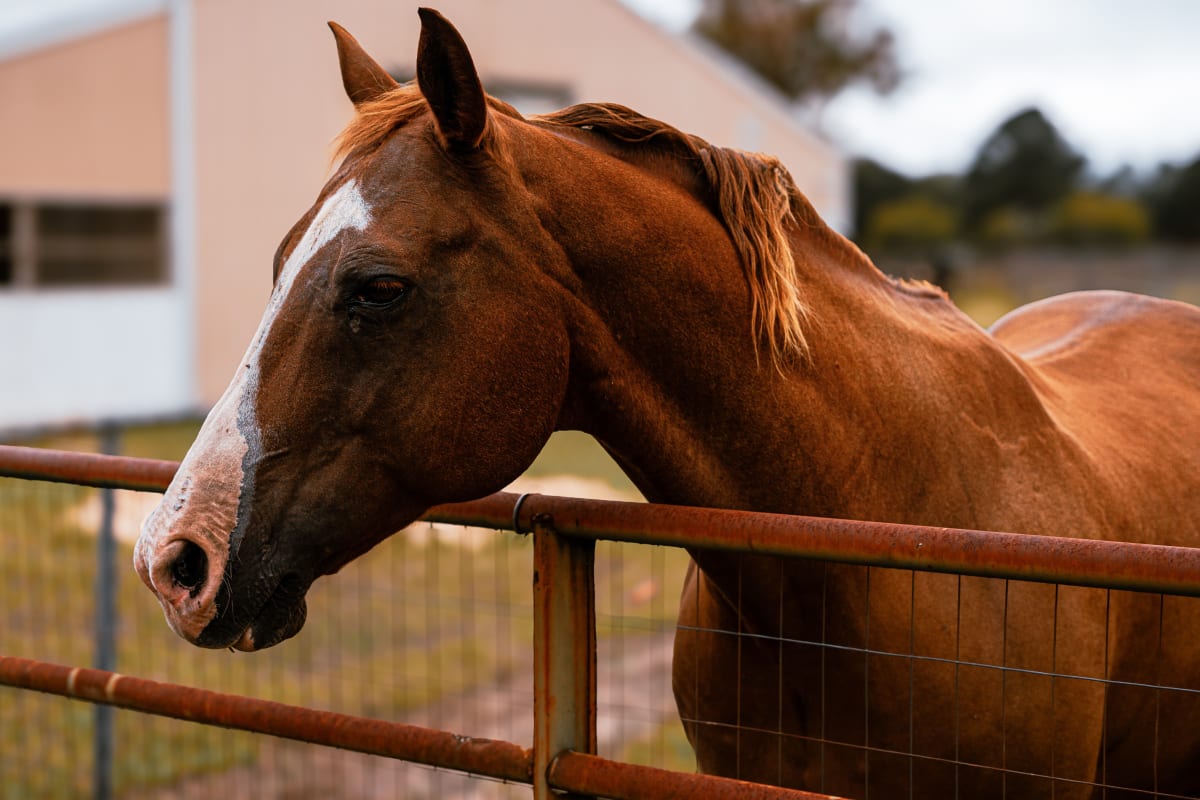
What criollo-type horses are like
- Compact size. They are usually smaller than the tall horses many visitors picture, often somewhere around 14 to 15 hands (roughly 1.40 to 1.50 m at the shoulder). That makes mounting easier and the ground feel less far away, which many first-time riders appreciate.
- Hardiness. Generations of life on ranches in hot climates have produced horses that cope well with heat and humidity, which matters on the Pacific coast.
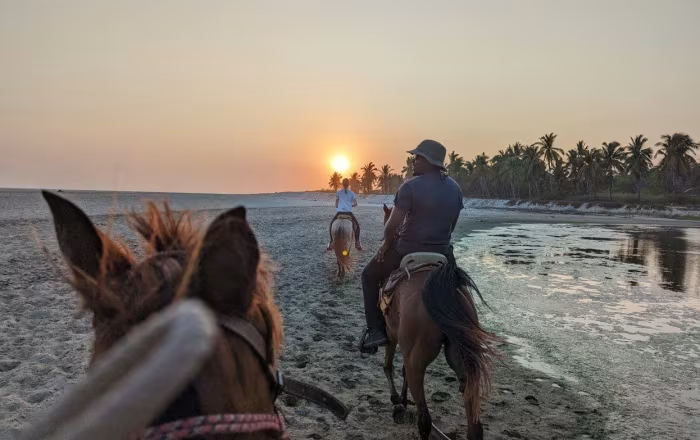
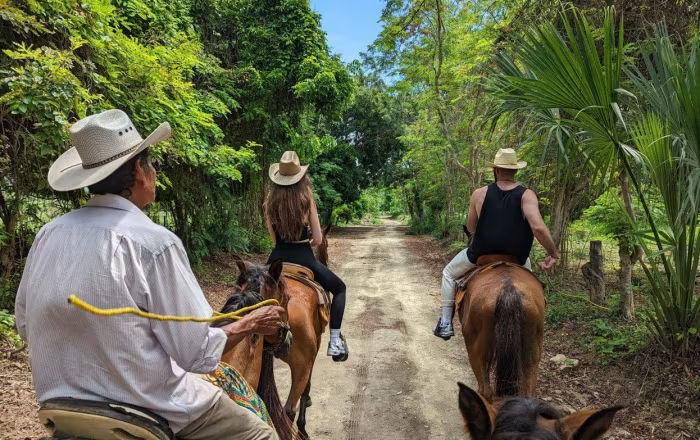
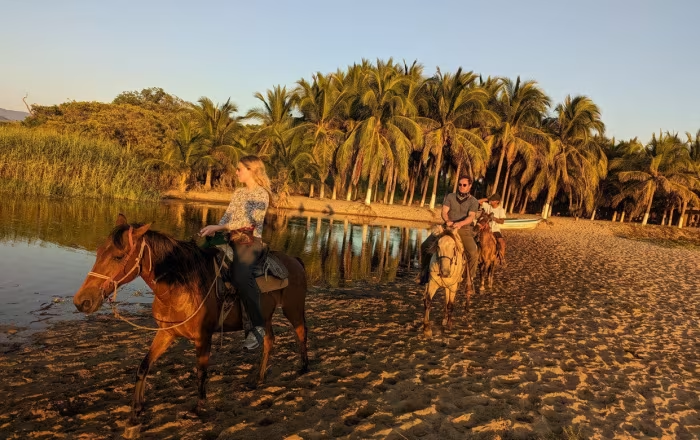
- Sure feet. They tend to be careful on uneven ground: riverbeds, roots on a jungle trail, soft sand. On the ride from San José Manialtepec you will notice your horse picking its way rather than charging.
- A steady temperament. Working ranch horses are used to people, dogs, cattle and traffic. A well-handled one is calm and patient with a nervous rider.
The smaller frame is also part of why most rides set a weight limit. On our ride the maximum is typically around 100 kg (220 lbs). It isn't a rule for its own sake: it keeps the work comfortable for the horse over four hours, through water and sand.
Other breeds you may see in Mexico
The Quarter Horse (Cuarto de Milla)
The American Quarter Horse is everywhere in Mexican ranching and rodeo. Muscular, quick off the mark and generally even-tempered, it is a popular choice for cattle work, and you will see plenty of horses on ranches with some Quarter Horse in their background. Many trail horses are criollo and Quarter Horse crosses.
The Azteca
The Azteca is a modern Mexican breed, developed in Mexico from the 1970s by crossing Andalusian horses with Quarter Horses and criollos. It is elegant, strong and associated with charrería, Mexico's traditional equestrian sport. You are more likely to see one at a charreada or a breeding ranch than on a beach trail, but it is part of the same story: Spanish horses meeting Mexican working stock.
Mixed horses
Honestly, this is the most common "breed" on the coast. A trail horse is chosen for its character, its health and how it behaves with beginners, not for its papers. A calm mixed horse that knows the river crossing well is a far better ride than a nervous purebred.
Colors and words you may hear
Guides and owners in Oaxaca will often talk about a horse by its color. A few words worth knowing:
- Alazán: chestnut, a reddish-brown horse with a mane of the same tone or lighter.
- Colorado or castaño: usually a bay, a brown body with a black mane, tail and lower legs.
- Tordillo or tordo: gray, often born dark and turning lighter with age.
- Pinto: patched, with large areas of white and a darker color.
- Prieto or negro: black.
Usage varies from region to region, so don't worry about getting them exactly right. Asking your guide "¿cómo se llama?" (what's its name?) is the best way to start a conversation, and most horses have one.
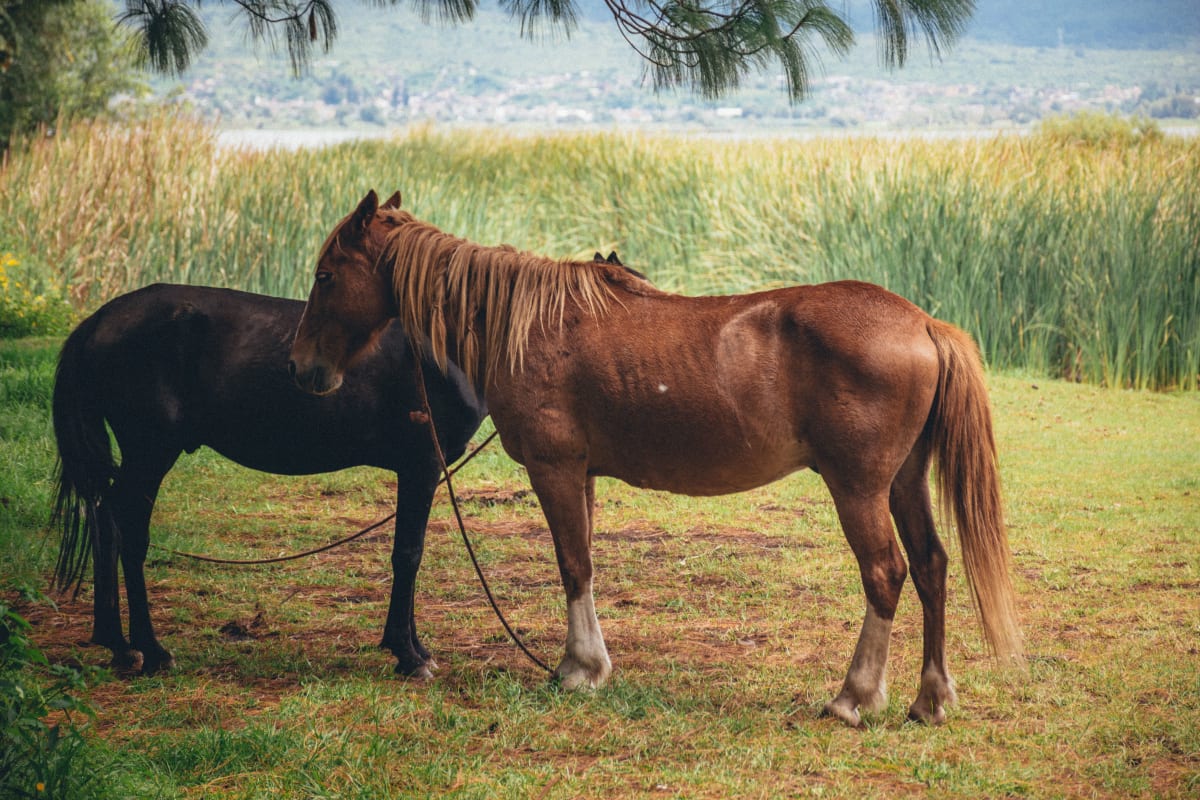
Meeting your horse on the day
When you arrive in San José Manialtepec, you meet the horses and their owner, get a helmet fitted and a short briefing, and your guide matches you to a horse that suits your level and size. A few habits help the first minutes go well:
- Approach from the side, where the horse can see you. Horses have a blind spot directly behind them and right in front of their nose.
- Speak calmly and move slowly. Let the horse sniff the back of your hand if it wants to.
- Stroke the neck or shoulder with a flat hand rather than patting the face.
- Don't feed it anything unless the owner says it's fine. Snacks from strangers can upset a horse's diet and its manners.
- Tell your guide if you're nervous. There is always a horse that suits a nervous rider, and the guide can only match you well if you say so.
If the saddle, reins and stirrups are new to you, our guide to western saddle gear on a beach ride explains each piece, and our tips for first-time riders cover posture and how to steer.
Common questions about the horses
Are the horses on the ride criollos?
Working horses on the Oaxacan coast are mostly local horses of mixed ancestry, and many carry criollo blood. They are not registered show horses, and nobody will hand you a pedigree. What matters is that they are calm, healthy and used to riders of every level, and that's how they are chosen.
Do the horses like the water?
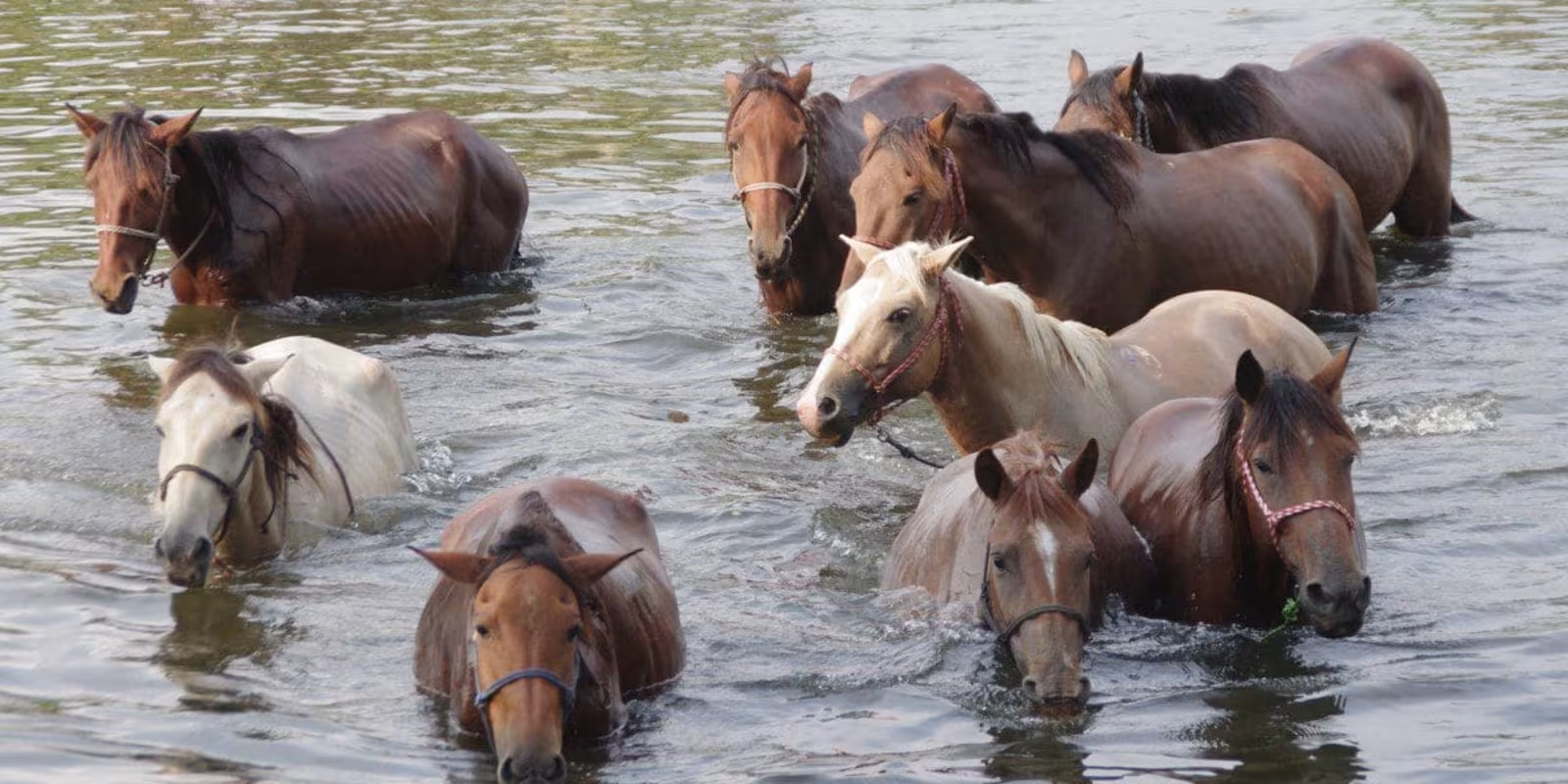
The horses on this ride cross the river regularly and are used to it. On the private ride they go one step further and swim across a branch of the lagoon while you cross by boat. Our comparison of the sunset ride and the private ride explains that route in detail.
Can I choose my horse?
Your guide makes the final call, because they know each horse's temperament and pace. You can always say what you prefer, a quieter horse or a slightly livelier one if you have experience, and they will take it into account.
How can I tell if the horses are well cared for?
Look for a healthy weight, a shiny coat, clean saddle areas without sores and a relaxed expression. It is the same checklist we recommend wherever you ride.
A good horse makes the ride
A criollo or a mixed trail horse won't win a show ring, but on a hot afternoon, through a river and along soft sand, a steady local horse is exactly what you want under you. If you'd like to know more about judging an operator by its horses, read our guide on how to choose an ethical horseback tour.