Western saddle, reins and stirrups: the gear on a beach ride explained
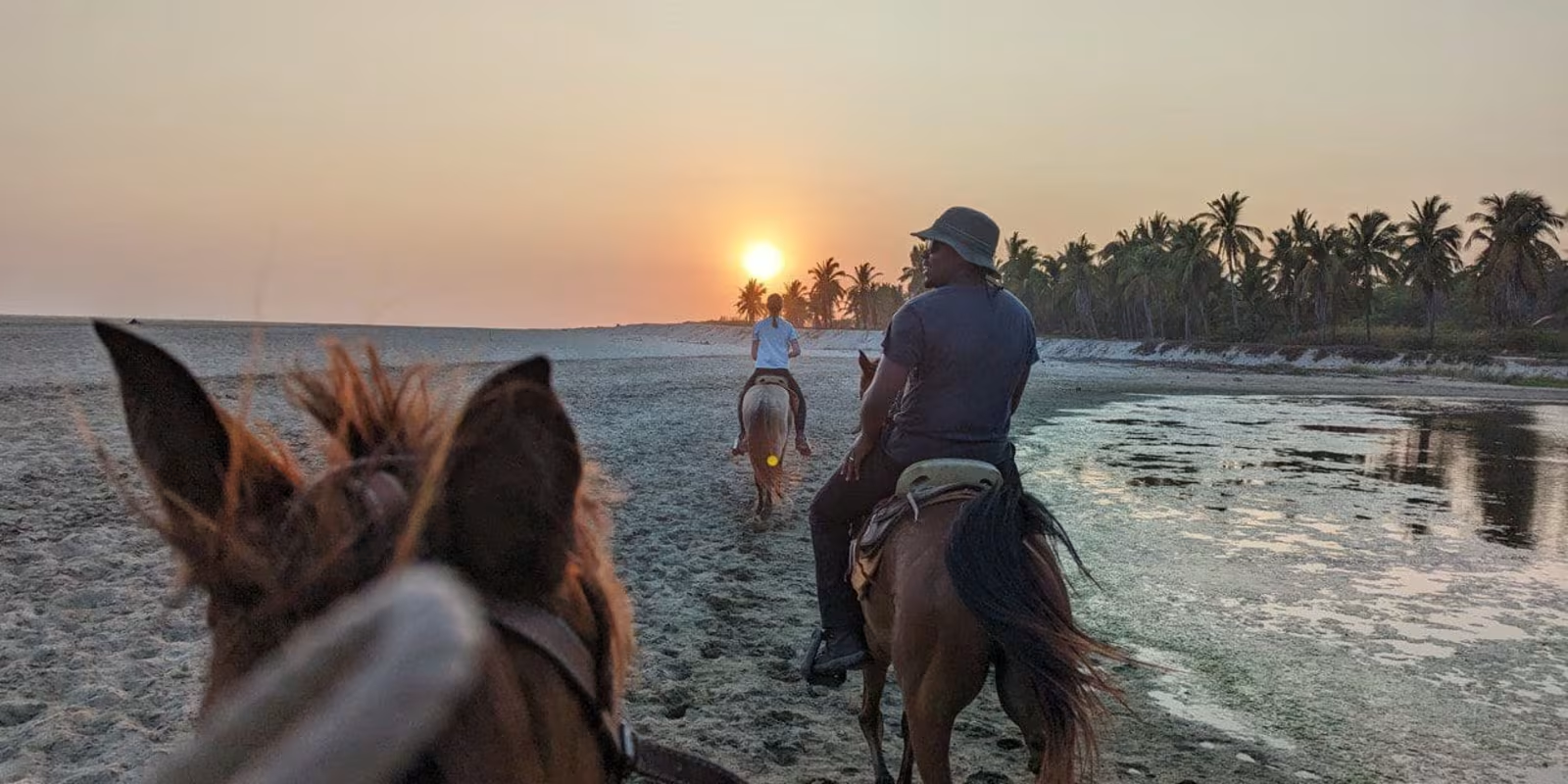
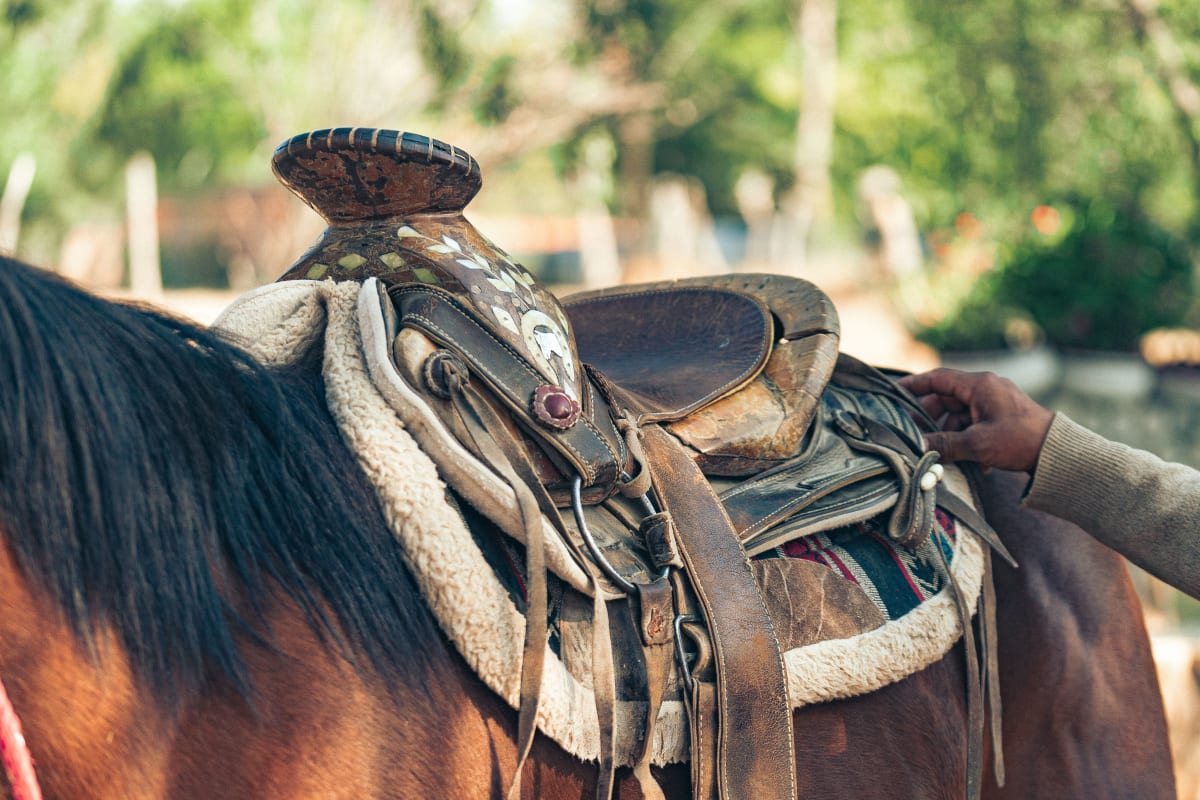
If your only picture of riding comes from English-style lessons or films, the saddle waiting for you in San José Manialtepec may look a bit different: deep, made of leather, with a horn sticking up at the front. That is the kind of stock saddle used for ranch work across rural Mexico, and it is the family the western saddle comes from. The good news for beginners is that it was built for long hours on uneven ground, and it holds you more securely than a flat English saddle does.
You don't need to learn any of this before the ride. Your guide fits everything and explains the basics on the spot. Knowing what each piece does, though, makes the first ten minutes a lot less mysterious. Here is the gear you'll meet, from the top of the horse's head to your feet.
The saddle, piece by piece
The horn
The knob at the front of the saddle. On a working ranch it is where the rider wraps a rope after catching a cow. On a beach ride it is a handle. Holding it while you mount, on a short steep climb or when the horse steps down a riverbank is perfectly fine, and many first-timers do. What you shouldn't do is ride the whole afternoon clinging to it. If you grip the horn all the time, you lean forward and stiffen up, which is the opposite of what keeps you balanced. And never loop the reins or a bag strap around it.
The seat and the cantle
The seat is the dip you sit in. Behind it, the back of the saddle rises into the cantle. Together they cradle your hips, which is why western-style saddles feel stable even at a walk on sand. Sit in the deepest part of the seat, not against the cantle and not perched forward on the horn. If you feel yourself sliding back on a climb, lean a little forward from the hips rather than pulling on anything.
The fenders and stirrup leathers
The wide leather flaps that hang down each side are the fenders. They cover the straps that hold the stirrups and keep them from rubbing your legs, though not completely. Shorts still get pinched at the knee, which is one more reason our guides insist on long pants.
The cinch and the saddle pad
Under the saddle sits a thick pad that protects the horse's back. The cinch (the girth, in English riding) is the wide strap under the horse's belly that holds everything in place. You won't touch it. Your guide tightens it before you get on, and it's normal to see them check it again a few minutes into the ride: many horses puff out their belly when they're first saddled and relax once they start walking, which loosens the cinch a little. If your saddle ever feels like it is slipping to one side, stop and tell your guide. It is a quick fix.
The bridle, the bit and the reins
The bridle is the set of straps on the horse's head. On many horses it holds a bit, a metal bar that rests in the mouth, and the reins attach to it. Some trail horses work on a bitless setup instead. Either way, the principle is the same: the reins carry small signals from your hands to the horse, and the softer the signal, the happier the horse.
- Hold them loosely. The horse needs to move its head to balance, especially in the river and on the jungle trail. A little slack is right. Tight reins all the time make a horse fussy.
- One hand or two. Western-trained horses are often ridden with the reins in one hand, steering by laying the rein against the neck. Beginners are usually more comfortable with two hands. Your guide will show you how your horse is used to being ridden.
- Turning and stopping. To turn, move your hands gently in the direction you want to go and look there. To stop, sit back and draw the reins toward your belly. Release the moment the horse responds.
- Never drop them. If you need both hands for a photo, ask your guide to hold your horse or wait for a stop. Our photo tips cover how to take pictures from the saddle without fumbling.
The stirrups
Western-style stirrups are wider than English ones, often with a broad flat tread, so your foot has a proper platform. That platform is a big part of why beginners feel secure in this kind of saddle.
Rest the ball of your foot on the tread, not your arch, and let your heel sink a little lower than your toes. Keep your foot from sliding all the way in: the idea is that it can come out easily if you ever need to get off quickly. This is exactly why the ride calls for closed-toe shoes with a small heel. A heel stops your foot from slipping through, and sandals or flip-flops are unsafe in a stirrup. Length matters too, and your guide adjusts it before you start. Our tips for first-time riders explain how a well-set stirrup should feel.
The helmet
A riding helmet is included for every rider, and your guide helps adjust it. It should sit level just above your eyebrows and stay put when you shake your head.
What your guide checks before you set off
Fitting a horse and rider takes a few minutes at the start, and it is worth watching. A careful guide will usually:
- Match you to a horse that suits your level and size (the maximum rider weight is typically around 100 kg / 220 lbs).
- Check that the saddle sits evenly and the cinch is snug.
- Help you mount, traditionally from the horse's left side, with the horse held steady.
- Adjust both stirrups to your leg length.
- Fit your helmet and give a short briefing on holding the reins, steering and stopping.
If anything feels wrong once you're up, say so before the group moves off. A stirrup that's a hole too long is a minute's work at the start and an annoyance for four hours if you keep quiet.
Common questions about western saddles for beginners
Is a western saddle easier for a first ride?
For a relaxed trail ride at a walk, most beginners find it easier. The deep seat, the horn and the wide stirrups give you more to hold on to and more support than an English saddle. You won't be trotting or jumping, so its main job is to keep you comfortable for the afternoon, and it does that well.
Will the saddle hurt?
Not if the stirrups are the right length and you sit relaxed. The usual complaint after a first ride is mild stiffness in the inner thighs, not saddle pain. Long pants make the biggest difference.
Can I bring a bag on the saddle?
Keep it small. A phone in a pocket that closes, or a slim cross-body bag worn snug, is ideal. Large bags and backpacks throw off your balance, and nothing should be tied to the horn.
What happens to the gear in the river?
On the shared ride the river crossing is shallow. Your feet and the bottom of the fenders may get splashed, and the horses are used to it. Bring a change of clothes and you're set.
Good gear, good horses
Well-fitting tack is also a sign of how an operator treats its horses. A saddle that sits right doesn't rub, and a horse that isn't sore is calmer under you. If you want to know what else to look for, read our guide on how to choose an ethical horseback tour.