Can you ride a horse in the ocean? Waves, the waterline and beach riding
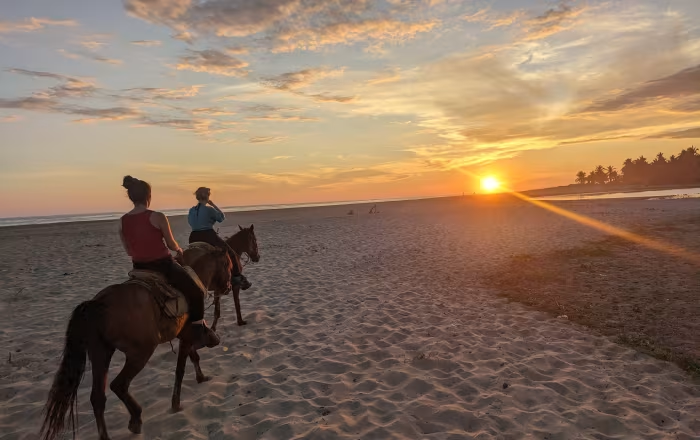
Most people who book a beach ride have a picture in their head before they arrive: a horse walking through the foam, water splashing around its legs, the sun going down over the sea. So one of the questions we hear most is a simple one: can you actually ride a horse in the ocean? The honest answer is yes, at the edge of it. Here's what that means on the Pacific coast near Puerto Escondido, and why "in the ocean" stops well short of the waves.
Can you ride a horse in the ocean?
Yes. Horses can walk, trot and even canter through shallow seawater, and many of them seem to enjoy it. On a calm, gently sloping beach, riders in some parts of the world take their horses in up to the knees or the belly, and a few places even swim horses in sheltered bays.
But "the ocean" covers very different waters. A flat, protected bay and an open Pacific beach with a steady shore break are not the same thing for a horse or for a rider. Where the beach is calm, wading is easy. Where the waves are strong, the sensible place for a horse is the waterline: the strip of wet sand where the last of each wave washes up and pulls back.
What the Pacific is like here
The coast around Puerto Escondido faces the open Pacific, with nothing to slow the swell for thousands of kilometers. That is why the town is famous for surfing. The beaches west of town, where our rides finish, are long, wide and quiet, but the sea in front of them is usually lively: waves break close to shore, the sand often drops off quickly once you're in the water, and currents can pull sideways or out to sea.
None of that is a problem on the sand. It is the reason, though, that nobody rides out into the surf on our rides. A wave that knocks a swimmer off their feet can also unbalance a horse, and a rider who falls in moving water is in a much worse spot than one who slips off onto the beach.
What you'll actually do at the waterline
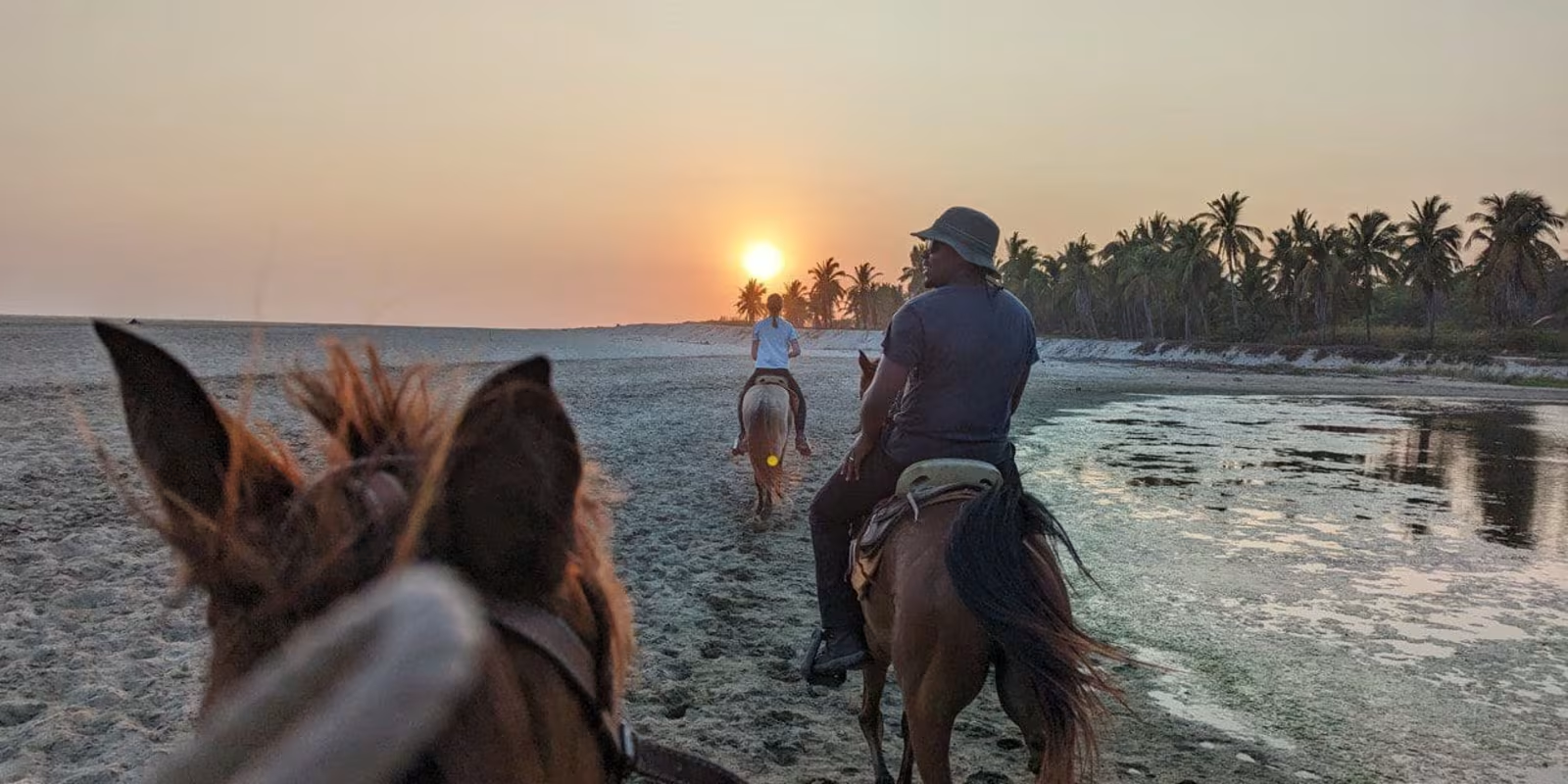
On both our sunset ride and our private ride, the last part of the route comes out of the trees and onto the beach. Your guide leads the group down to the firm, wet sand near the water, and that's where most of the beach riding happens. In practice, that usually means:
- Hooves in the wash. The tail end of the waves runs up around your horse's legs and back out again. You'll hear it, see it and probably feel a bit of spray.
- Walking on wet sand. Packed, damp sand is the easiest ground on the beach for a horse. Dry, soft sand higher up is much harder work for them, a bit like you walking in deep snow.
- Stops for photos and the sunset. The guide picks a spot where the light and the waves line up, so you can take pictures with both hands while the horse stands.
- A faster pace, sometimes. On the private ride, if you feel comfortable, your guide can help you try a gentle gallop along the shore on Puerto Suelo beach. On the shared ride the pace stays relaxed.
How close to the water you ride on a given day is the guide's call. It depends on the waves, the tide and how the horses and riders are doing. Some evenings the wash comes right up around the horses; other evenings the guide keeps the group a few meters higher up the sand.
Do horses like the sea?
Many horses that live near the coast get used to the waves and walk through the wash without a second thought. A horse meeting the sea for the first time can be nervous of the noise and the moving water, which is one reason it matters that the horses on a beach ride know the beach. The horses on our routes live in the area and walk this stretch of coast regularly.
Salt water is also not something a horse should stand in for hours. A short time at the waterline is fine for a healthy horse, and caring owners rinse and check their animals after beach work. If animal welfare is on your mind, our post on how to choose an ethical horseback tour lists what to look for in any ride.
What about swimming with your horse?
If the swimming part is what you're really after, there is a way to see it, just not in the surf. On the private ride, the horses swim across a calm branch of Manialtepec Lagoon while you cross beside them in a small boat. Calm, sheltered water, short distance, no rider on board: that's how a sensible horse swim looks. We explain the whole crossing in Can horses swim? The lagoon crossing on the private ride.
Is riding at the water's edge safe for beginners?
Yes. You don't need any riding experience for either ride, and the waterline is at a walk for most of the time. A few things make it easier:
- Keep your heels down and your weight in the saddle. If your horse steps sideways from a wave, you'll stay balanced.
- Hold the reins with a light contact, not a death grip. Your horse knows the beach better than you do.
- Stay a horse's length from the rider in front. Horses can kick if they're crowded, and on sand there's plenty of room.
- Tell your guide your level. They match horses to riders and choose how close to the water each person goes.
Our first-time horseback riding tips go through the basics in more detail.
How wet will you get on the beach?
Not very, usually. Splashes from the wash tend to reach your shoes and the lower part of your pants, rarely more. The river crossings earlier on the route are more likely to get you wet than the sea. Still:
- Wear long pants and closed-toe shoes you don't mind getting damp or sandy.
- Pack a swimsuit and a change of clothes, as the packing list says.
- Keep your phone in a pocket that closes or a small waterproof pouch. The beach is where phones get dropped, usually in the middle of a photo.
- Sunscreen, even on the afternoon ride. The light off the water is strong.
Our guide to what to wear for horseback riding in Puerto Escondido covers the details.
Does the sea change with the seasons?
Yes. The Pacific swell on this coast tends to be bigger from about May to October, the season of the big south swells that bring surfers to Puerto Escondido, and calmer on many days from November to March. The rides run all year either way; what changes is how much water reaches the horses and how far up the beach the guide keeps the group. If you're traveling in the green season, our post on riding in the rainy season explains what else is different.
The short answer
You can ride a horse in the ocean, in the sense most people picture: hooves in the foam, wet sand, the sun going down in front of you. On the open Pacific you won't ride out into the waves, and you shouldn't want to. For the best shots of that moment at the waterline, read our horseback riding photo tips before you go.