Is horseback riding good exercise? What a four-hour ride does for you
People who have never ridden often assume the horse does all the work. People who have just ridden for an afternoon, and are walking a little stiffly to dinner, tend to disagree. So is horseback riding good exercise? Yes, though not in the way a run or a gym session is. Here is an honest look at what your body does on a relaxed trail and beach ride, and what it doesn't.
Is horseback riding good exercise?
It counts as real physical activity. Exercise researchers rate activities in METs, a measure of effort compared with sitting still, where 1 is rest. The Compendium of Physical Activities, the standard reference, gives these values for riding:
- Walking: 3.8 METs
- General riding: 5.5 METs
- Trotting: 5.8 METs
- Canter or gallop: 7.3 METs
Anything from 3 up to 6 METs is usually classed as moderate activity, so even riding at a walk makes the cut. A beginner-friendly tour at a relaxed pace sits at the gentle end of that range. Expect something closer to a long, active stroll than to a workout that leaves you out of breath, with some muscles working that a stroll never reaches.
Which muscles does horseback riding work?
A walking horse moves its back in a steady rhythm: side to side, up and down, forward and back. You stay on top of that by making small corrections all the time, mostly without thinking about it.
Core and lower back
Your abdominal and back muscles keep you upright while the horse moves under you. Sitting tall for a couple of hours is quiet work, and it is the part most riders underestimate.
Inner thighs and hips
Your legs rest around a wide animal, so your hips stay open in a position they rarely hold. The inner thigh muscles help steady you. Gripping hard is a mistake, but they are busy even when you ride relaxed.
Calves, ankles and feet
Keeping your weight down through the heels and the balls of your feet in the stirrups uses your lower legs, especially when the trail climbs or drops.
Shoulders and arms
Holding the reins is light work. If your arms are tired afterwards, you were probably holding on tighter than you needed to.
Balance, posture and a clear head
Riding asks you to keep your balance on something that is moving and has opinions of its own. You practise coordination, posture and attention at the same time. It also gets you outdoors, away from a screen, looking at a river, a line of trees and then the ocean. We won't promise a health cure, but many riders say they finish the afternoon tired in a pleasant way.
What a four-hour ride really involves
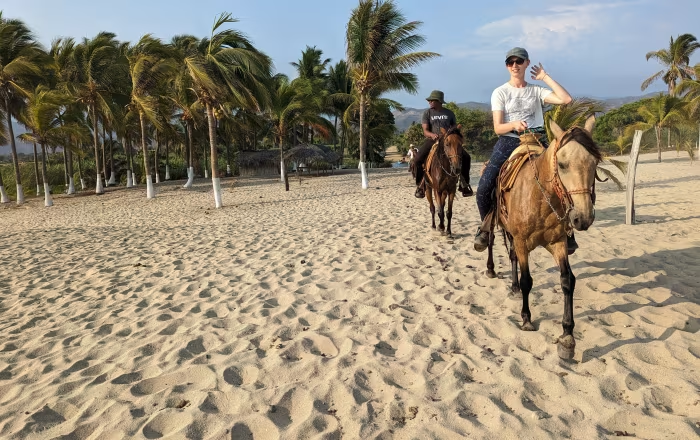
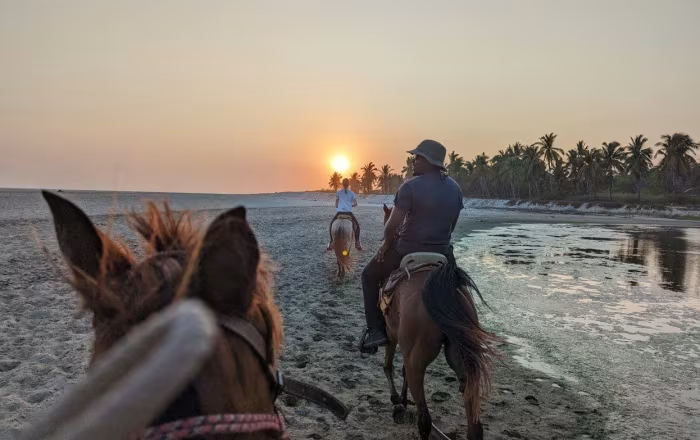
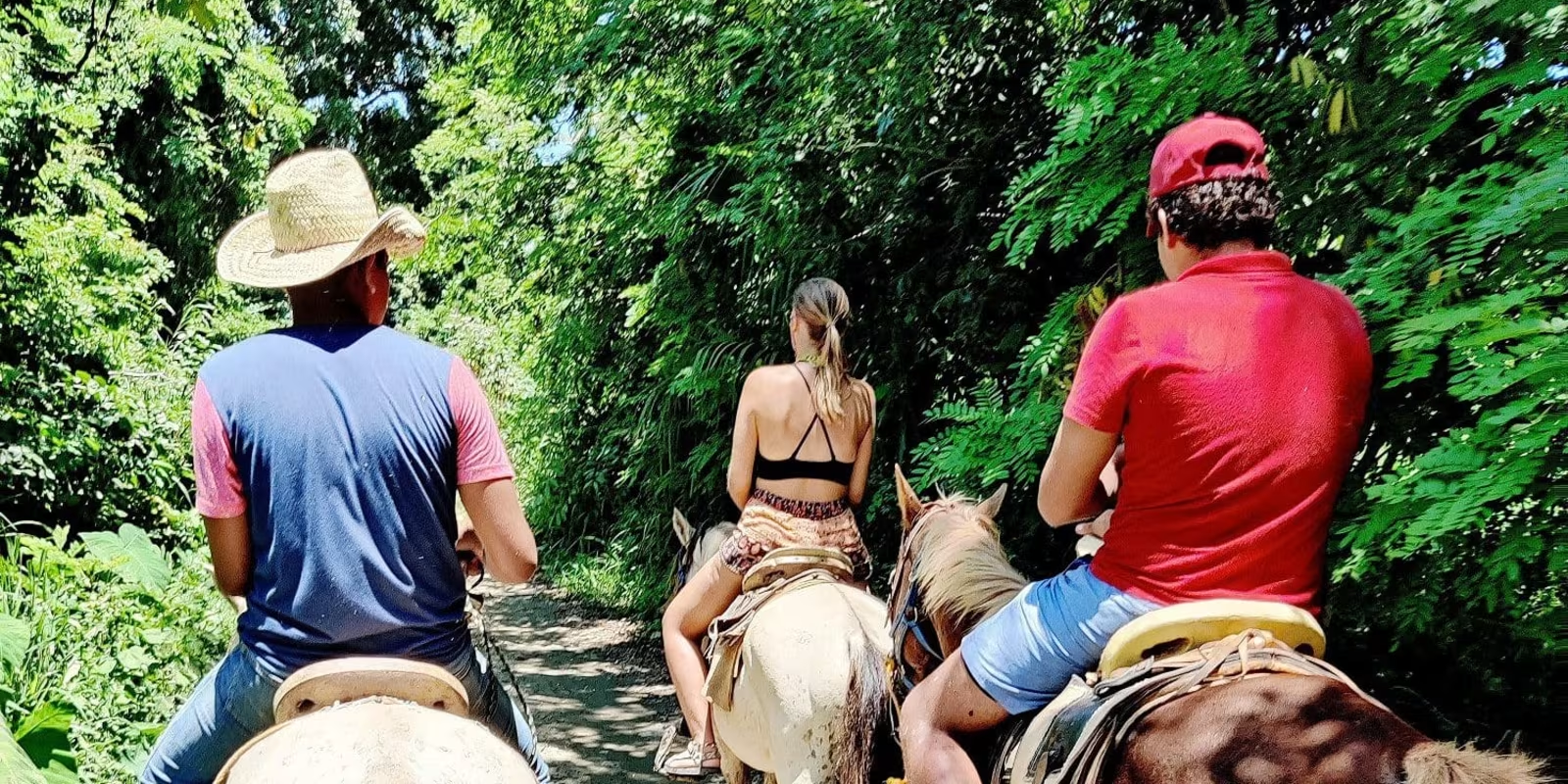
Our sunset ride takes four hours from hotel pickup at 3:00 PM to drop-off at 7:00 PM. Not all of that is spent in the saddle. The first half hour is the drive to San José Manialtepec, then you get a helmet and a briefing, and the trail starts around 4:00 PM. From there you ride along the river, through the jungle and onto the beach, with the sunset as the main stop, before heading back.
So think of it as roughly two and a half to three hours of mostly gentle riding, with pauses. That is a good stretch of light to moderate activity for someone on holiday.
How many calories does horseback riding burn?
You can make a rough estimate by multiplying the MET value by your weight in kilograms and by the hours ridden. At the walking value of 3.8, over two and a half hours:
- A 60 kg rider: about 570 kcal
- A 70 kg rider: about 665 kcal
- An 85 kg rider: about 810 kcal
Treat these as ballpark figures. They include the energy your body would have used sitting still anyway, and they take no account of stops, your fitness or how your horse moves. A ride is a pleasant way to be active, not a diet plan.
Does it replace your usual training?
Not on its own. The World Health Organization recommends that adults get at least 150 minutes of moderate activity a week, and its guidelines also call for muscle-strengthening work on two or more days. One long ride can make a real contribution to the first figure that week. It doesn't build strength the way lifting does, and a walking horse won't train your heart and lungs like swimming or running. If you ride once on holiday, count it as a bonus.
Will you be sore the next day?
Possibly, especially in the inner thighs, hips, seat and lower back, if these are positions your body isn't used to. It often shows up a day later and fades within a few days. A few things help:
- Wear long pants without thick inner seams, and closed-toe shoes. Our guide to what to wear for horseback riding has the details.
- Ask your guide to adjust your stirrups if your knees or ankles start to ache.
- Let your hips move with the horse instead of bracing against it.
- Drink water, and stretch your legs and hips gently when you get off.
- Keep the next morning easy: a walk or a calm swim where it is safe to swim.
Do you need to be fit to ride?
No. Our horses are calm, the pace is relaxed and no experience is needed. You do need to be comfortable sitting astride for a couple of hours and able to get on and off with a little help. The maximum rider weight is typically around 100 kg (220 lbs).
If you are pregnant, recovering from an injury or surgery, or have back, hip, knee or heart trouble, ask your doctor before booking, and tell us when you do. If it is your first time on a horse, read our 10 tips for first-time riders: sitting well is what makes the difference between a good workout and a sore evening.
Photo: puerto-escondido.mx